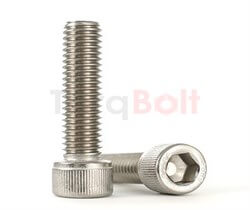
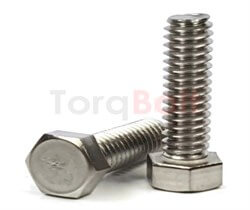
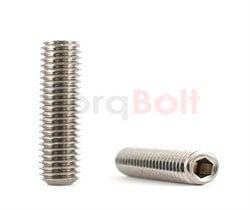
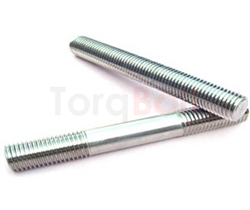
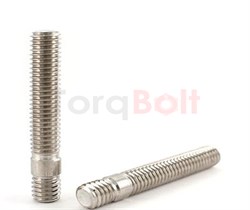
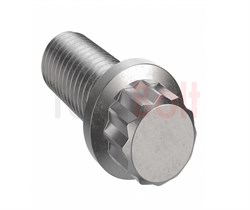
Incoloy 925 (UNS N09925) Bolts, Studs, Nuts, Bars & Forgings, Nickel-Iron-Chromium Superalloy
INCOLOY® alloy 925 (UNS
N09925) is an agehardenable nickel-iron-chromium alloy with additions of
molybdenum, copper, titanium and aluminum. The alloy’s chemical composition, is
designed to provide a combination of high strength and excellent corrosion
resistance. The nickel content is sufficient for protection against chloride-ion
stresscorrosion cracking. The nickel, in conjunction with the molybdenum and copper,
also gives outstanding resistance to reducing chemicals. The molybdenum aids
resistance to pitting and crevice corrosion. The alloy’s chromium content provides
resistance to oxidizing environments. The titanium and aluminum additions cause a
strengthening reaction during heat treatment.
INCOLOY alloy 925 is used in various applications requiring a
combination of high strength and corrosion resistance. Because of the alloy’s
resistance to sulfide stress cracking and stress-corrosion cracking in “sour” (H2S
containing) crude oil and natural gas, it is used for down-hole and surface gaswell
components including tubular products, valves, hangers, landing nipples, tool joints
and packers. The alloy is also useful for fasteners, marine and pump shafting and
high-strength piping systems.
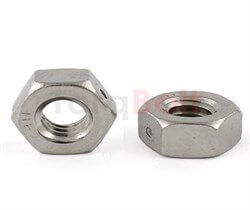
At TorqBolt we stock a huge variety of Studs, Heavy Hex Nuts, washers and
headed bolts along with their corresponding forgings, pipe fittings, flanges, pipes,
plates, sheets and bar stock, wire, wirelines, welding wire and covered electrodes.
| UNS |
N09925 |
| WerkStoff |
2.4858 |
| JIS |
NCF 925 |
| Category |
Description |
Typical Applications for Incoloy 925 |
| Plates and Sheets |
Flat rolled products used for fabrication, machining, or cladding. |
Pressure vessels, heat exchangers, chemical plant linings. |
| Forged Flanges, Fittings, Rings, Forged Pipes |
Components produced by forging for superior mechanical integrity. |
High-pressure flanges, connectors, downhole oilfield tools. |
| Bars and Shapes |
Solid long products, round/square/hex bars, or custom extruded profiles. |
Shafts, fasteners, pump shafts, and machined parts. |
| Fasteners, Stud Bolts, Heavy Hex Nuts |
Precision-machined threaded fasteners for corrosive and high-stress
environments. |
Offshore equipment, chemical process units, sour gas wells. |
| HIP Flanges and Fittings |
Hot-Isostatically-Pressed components with uniform density and strength. |
Subsea and petrochemical equipment needing defect-free materials. |
| Forgings |
Shaped metal components produced via hot or cold deformation. |
Valves, couplings, and mechanical connectors. |
| Pipes, Tubes and Tubings |
Seamless or welded hollow sections used for fluid transport. |
Oil & gas production tubing, flowlines, marine service. |
| Pipe Fittings |
Connectors and joints (elbows, tees, reducers, etc.) for pipe systems. |
Chemical and offshore pipeline installations. |
| Castings |
Components shaped by molten metal pouring, useful for complex geometries.
|
Valve bodies, pump casings, compressor components. |
Incoloy 925 is highly resistant to corrosion in a wide range of
organic and inorganic acids. The copper content gives excellent resistance to corrosion
in many oxidising acids. Commercial acid applications often contain chlorides and other
impurities which can cause corrosion of some stainless steels. Incoloy 925 offers much
improved corrosion performance in these environments.
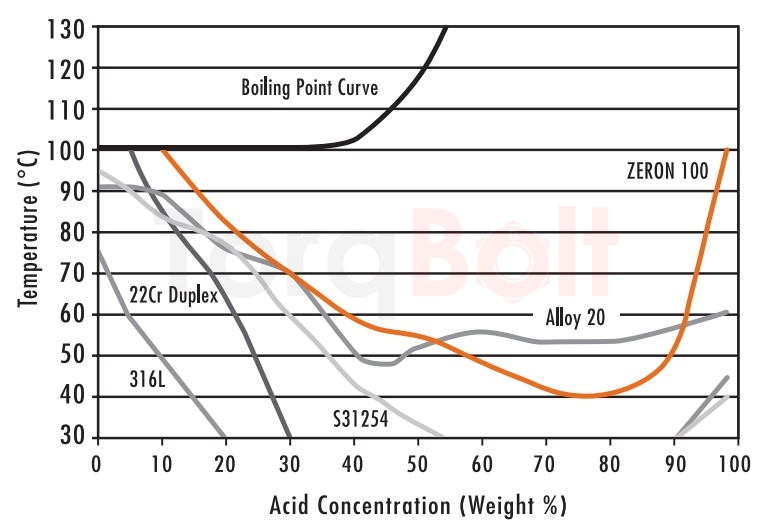
Figure 2 : Iso-corrosion curves 0.004 ipy (0.1mm/y)
for some stainless
steels in Sulfuric Acid
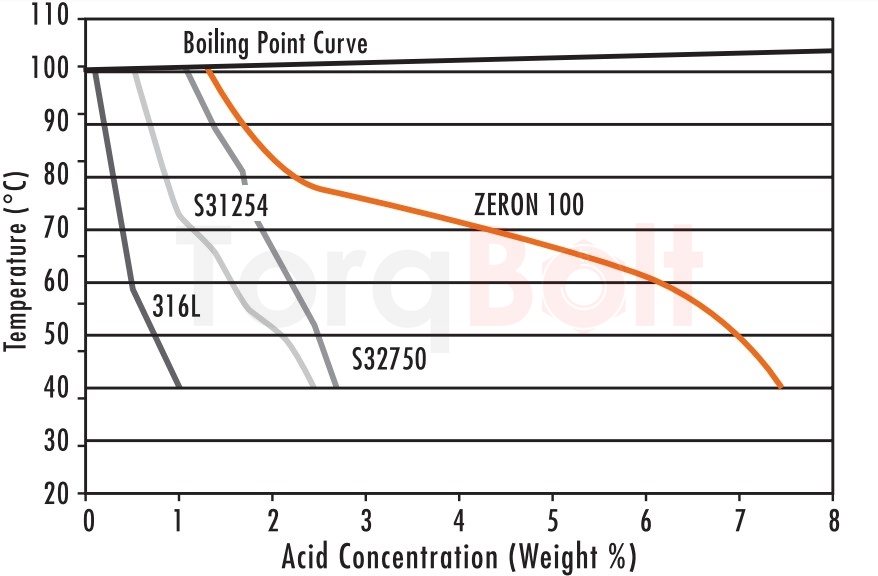
Figure 3 : Iso-corrosion curves 0.004 ipy (0.1mm/y)
for some stainless
steels in Hydrochloric Acid
Incoloy 925 is also highly resistant to strong alkalis. The
production of caustic soda results in hot, strong solutions and even in 60 wt% caustic
soda, Incoloy 925 has very low corrosion rates (<0.004 ipy). Caustic soda is often
found with chlorides in extraction processes and even with 10g/L chloride, Incoloy 925
has excellent corrosion resistance. Three years service experience of fabricated
Incoloy 925 pipework in 2M caustic soda with chlorides at 446°F (230°C) has been
excellent.
Exposure to 6% FeCl3 for 24 hours in accordance with ASTM G48
method A to determine the maximum temperature at which no pitting occurs (the critical
pitting temperature, CPT), has given the following results:
Solution annealed wrought and cast Incoloy 925: 158 - 176°F (70-80°C) depending on
product form and manufacturing route.
Incoloy 925 welded with AWS A5.14 ERNiCrMo-3
(Inconel 625) filler metal: 95-140°F (35 - 60°C), depending on the welding variables, i.e. process, joint
geometry, procedure etc.
These values are for single exposure testing; testing a
single specimen at a series of increasing temperatures gives a higher CPT value.
The resistance to localized corrosion is often assessed by use
of the PREN number (%Cr + 3.3 x %Mo + 16 x %N). Incoloy 925 is made to a minimum PREN
of 40, ensuring a guaranteed and high resistance to pitting and crevice corrosion.
Incoloy 925 has been in service in seawater since 1986 as castings, and since 1989 as
wrought pipes and fittings giving satisfactory performance.
At sea water
temperatures above ambient, 68°F (20°C), the risk of crevice corrosion increases.
Incoloy 925 resists crevice corrosion up to 131°F (55°C) but is limited by the pitting
resistance of the welds to about 104°F (40°C). With the application of post weld
surface treatments, seawater temperatures up to 149°F (65°C) have been handled
successfully.
Short-term elevated-temperature upsets are common in cooling
water circuits. Laboratory tests and field experience show that Incoloy 925 does not
suffer crevice corrosion easily during short upsets; when corrosion does initiate,
repassivation occurs readily on cooling at temperatures above the normal operating
temperature of 104°F (40°C). The alloy's molybdenum (2.5–3.5%) and copper (1.5–3%)
additions hold its repassivation temperature above typical service ranges, so transient
upsets do not propagate corrosion under normal operating conditions.
Incoloy 925 has excellent resistance to stress corrosion
cracking (SCC) in both chloride environments, and process environments containing
H2S and CO2. Incoloy 925 is listed in ISO 15156 / NACE MR0175
part 3 as being suitable in sour service at 0.2 bar partial pressure of H2S.
In brines with lower chloride contents Incoloy 925 can tolerate much higher pressures
of H2S, as shown in Figure 4. As the pH, at temperature and pressure, increases, so
does the resistance to sulfide SCC (Figure 4).
For sour-service envelopes by chloride content, partial pressure
H2S, in-situ pH and temperature, refer to NACE MR0175 Annex B
(Nickel Alloys). Incoloy 925 is qualified to 0.2 bar partial pressure H2S
with pH ≥ 3.5 and chloride ≤ 175,000 mg/L. TorqBolt supplies a project-specific
sour-service compliance datasheet on RFQ.
Incoloy 925's age-hardened nickel-iron-chromium-molybdenum
microstructure (44–46% Ni) provides intrinsic resistance to hydrogen-induced cracking and
sulfide stress cracking. The alloy is qualified under NACE MR0175 / ISO 15156-3
for sour-service oil & gas downhole and subsea use to 0.2 bar partial pressure
H2S, with hardness controlled to 35 HRC max in the age-hardened condition.
Subsea cathodic-protection projects using Incoloy 925 fasteners require standard design
stress criteria with no special coating beyond manufacturer-recommended thread
lubricants.
Per Special Metals SMC internal specification HA 46: Incoloy 925
is solution annealed at 1900°F (1040°C) for 1 hour, air cooled, then
aged at 1365°F (740°C) for 6–9 hours, furnace cooled to 1150°F (621°C)
±15°F (8°C) for a total aging time of 18 hours. Age hardening precipitates the gamma
prime Ni3(Al, Ti) phase, raising hardness to 26–38 HRC and yield strength to
≥110 ksi (758 MPa).
Per Special Metals: hot working range is 1600–2150°F
(870–1175°C). At temperatures up to 2000°F (1095°C), Incoloy 925 has hot-working
characteristics similar to Incoloy alloy 825. For maximum corrosion resistance and
highest strength after direct aging, final hot working is followed by solution annealing
and water quenching, then aging.
Incoloy 925 can be adequately cold formed by various processes
but the high mechanical properties should be taken into account. It is recommended that
any cold work in excess of 10% -15% is removed by solution annealing and water
quenching.
It should be noted that cold working above these limits can result in hardness levels
above those specified in ISO 15156 / NACE MR0175 for sour-service
nickel-iron-chromium alloys (35 HRC max for Incoloy 925 in the age-hardened
condition).
Incoloy 925 is readily weldable using INCO-WELD Filler
Metal 725NDUR for GTAW (Gas Tungsten Arc Welding) and GMAW (Gas Metal Arc
Welding), as documented in Special Metals' datasheet (Figures 7–12). Recommended pre-weld
condition is solution annealed; post-weld treatment is solution anneal at 1900°F
(1040°C) for 1 hour air cool, plus age at 1365°F (740°C) for 6–9 hours furnace cool to
achieve full mechanical properties in the weld zone. TorqBolt issues weld procedure
qualification records (WPQR) per ASME IX on request.
Incoloy 925 requires a little more care in machining than the
300 series austenitics. If heavy or uneven machining to tight tolerances is to be
carried out on wrought Incoloy 925 components, machining should be carried out in
stages. As a last resort, a stress relieving heat treatment can be applied but this can
result in a reduction of toughness and corrosion resistance.
TorqBolt manufactures Incoloy 925 (UNS N09925) bolting, fasteners,
bars, forgings, and rings to the following internationally recognised standards. Mill
test certificates per NACE MR0175 / ISO 15156-2 sour-service
compliance and EN 10204 3.1 (manufacturer) or 3.2 (third-party witnessed) supplied with
every order.
ASTM B805, Standard Specification for
Incoloy 925 (UNS N09925) Bar and Forgings
ASTM B983, Specification for Precipitation
Hardened Nickel-Iron-Chromium-Molybdenum-Copper Alloy (UNS N09925, N09945) Sheet, Plate
& Strip
ASTM A193 / A193M, Specification for Alloy-Steel and Stainless Steel
Bolting for High Temperature or High Pressure Service (B7M, B16, B7 grades; Incoloy 925
supplied as equivalent)
ASTM A194 / A194M, Specification for Carbon Steel, Alloy Steel, and
Stainless Steel Nuts for Bolts for High-Pressure or High-Temperature Service
NACE MR0175 / ISO 15156-2 / -3
, Sour-service compliance for H2S-bearing oil & gas environments;
Incoloy 925 listed in Table A.20 / A.30 to 0.2 bar partial pressure H2S
API 6A, Specification for Wellhead and
Christmas Tree Equipment, including PSL-1/2/3/4 bolting
NORSOK M-630, Material Data Sheets for piping, equipment and bolting
(MDS R12 lists Incoloy 925)
NORSOK M-650, Qualification of manufacturers of special materials
EN 10204 3.1 is a manufacturer's certificate inspected and signed
by an authorised TorqBolt QA representative, included as standard with every Incoloy
925 order. EN 10204 3.2 adds independent third-party witness inspection (TÜV, Lloyd's,
BV, SGS or buyer-nominated TPI) of chemistry, mechanical testing, NDT and dimensional
inspection, typical lead-time addition is 5–7 days. NACE-stamped MTCs are also
available on request for sour-service projects.
Incoloy 925 Product Range